
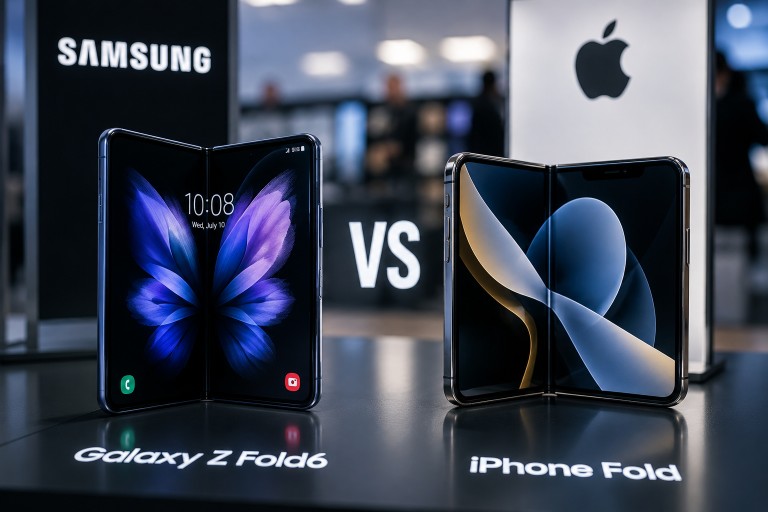
As Samsung Electronics gears up for the launch of its next-generation Galaxy foldable smartphones on July 22, the company is strategically positioning itself to fortify its standing in the premium foldable market. This move comes as Apple is anticipated to make its debut in the foldable segment later this year, potentially intensifying competition among top-tier smartphone manufacturers.
Last year’s emphasis on ultra-thin smartphone designs is giving way to consumer preferences that prioritize features like battery life, camera performance, durability, and cost-effectiveness over mere slimness. In response, Samsung has managed to make its latest Galaxy Z Fold model notably thinner and lighter than its predecessor, showcasing advancements in hinge design, battery technology, display quality, camera systems, and thermal management. These improvements are part of Samsung’s broader strategy to enhance the practicality of foldable devices for everyday use without sacrificing performance.
Though Apple has yet to officially announce its entry into the foldable market, there is widespread speculation that it will introduce a foldable iPhone this year. Rumors suggest the tech giant is working on integrating a robust folding display, high-performance cameras, extended battery life, and a lightweight design into its first foldable offering. This anticipated entry by Apple is expected to stimulate competition and accelerate innovation within the premium segment of the smartphone market.
The foldable smartphone arena is also seeing increased competition from Chinese manufacturers, who are bringing to market devices that are not only thinner but also equipped with larger batteries. This shift indicates a broader industry trend where manufacturers are focusing less on achieving the thinnest possible design and more on delivering a well-rounded user experience.
Despite the mounting competition, Samsung continues to leverage its established foldable ecosystem, extensive global distribution network, and robust software support, which includes AI-powered features. Analysts suggest that while Apple’s entry might heighten the competitive landscape, it is likely to propel further advancements and innovations in the realm of premium smartphones, ultimately benefiting consumers.