
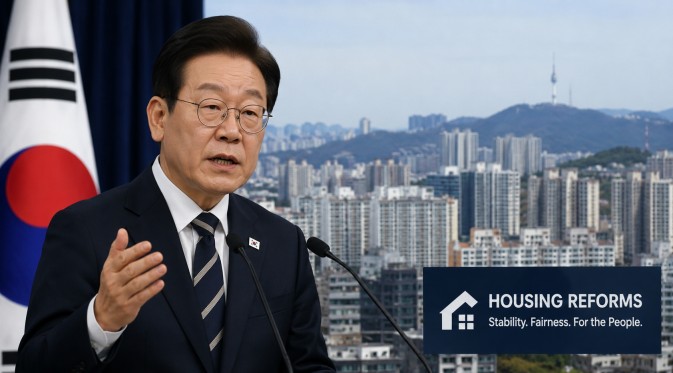
South Korean President Lee Jae Myung has announced plans to advance significant housing reforms, even at the risk of facing political repercussions. During a policy forum, Lee emphasized that failing to control the property market bubble could result in prolonged economic stagnation similar to Japan’s experience following its own property crisis.
The government’s reform measures under consideration include increased property holding taxes, adjustments to capital gains taxes, and stricter regulations on mortgage lending to deter speculation and bring stability to the housing sector. Lee highlighted the necessity of these changes, stating that without intervention, South Korea could endure a prolonged economic downturn.
Lee’s approach targets multiple-home owners and those possessing high-value speculative properties with higher tax burdens, while aiming to shield single-home owners, lower-income households, and residents outside the capital area. Additionally, he proposed stricter controls on rental-deposit loans, with certain exemptions for groups such as young people, newlyweds, and other vulnerable individuals.
Stressing the importance of these difficult reforms, President Lee underscored that the government must be prepared to endure political costs to avert a larger economic crisis. The administration plans to unveil a comprehensive real estate policy package by the end of the month or early August to address these issues.