
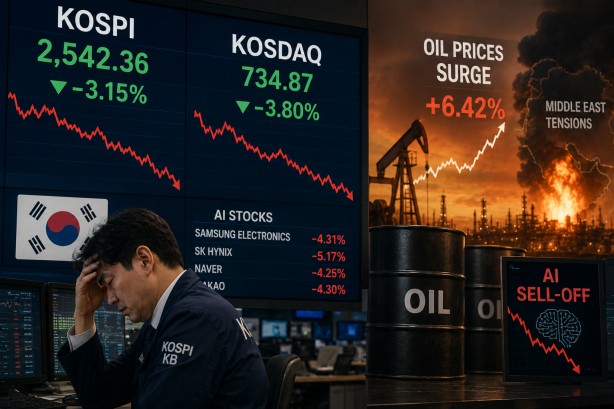
Asian markets mostly saw gains on Monday, though South Korea’s Kospi index experienced a significant drop of nearly 5%. This downturn was driven by the sell-off of artificial intelligence-related stocks, as investors grew wary of the sector’s valuations. Notably, technology giants such as Samsung Electronics and chipmaker SK Hynix saw declines of 4.4% and 3.3%, respectively.
In contrast, other markets in the region fared better. Hong Kong’s Hang Seng index increased by 2.1%, while China’s Shanghai Composite rose by 1.2%. Taiwan’s stock market showed little overall movement, but Taiwan Semiconductor Manufacturing Co. posted a 2% gain. Meanwhile, Australia’s benchmark index edged higher, while India’s Sensex slipped by 0.9%.
Concerns about the sustainability of the AI sector are mounting globally, as investors ponder whether heavy investments have led to a market bubble. This sentiment was exacerbated by the debut of Kimi K3, a new open-source AI model from Beijing-based Moonshot AI, which has intensified competition in the sector. These developments have put technology stocks under pressure worldwide.
On the energy front, oil prices surged amid escalating tensions between the United States and Iran. Brent crude rose by 2.6% to $90.40 per barrel, while U.S. crude increased by 2.2% to $83.58 per barrel. The situation in the Middle East has sparked fears of broader disruptions, particularly as tanker traffic through the Strait of Hormuz, a critical route for energy exports, has slowed considerably.
In the United States, Wall Street closed last week with losses across major indices, including the S&P 500, Dow Jones Industrial Average, and Nasdaq. The decline was notably pronounced among chip stocks, with companies like Nvidia, Broadcom, and AMD seeing their shares fall. This downturn reflects the broader uncertainties affecting technology stocks amid the ongoing evaluation of the AI sector’s trajectory.