
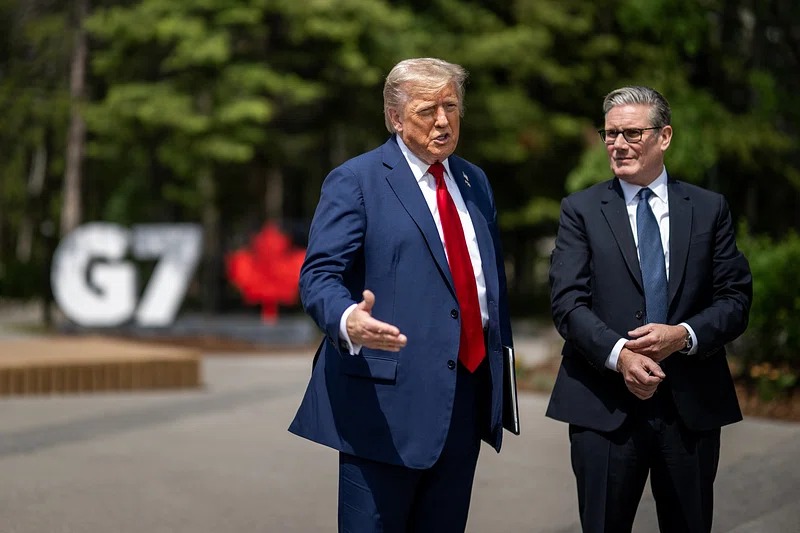
When the United States and Israel launched strikes on Iran, the expectation in Washington was that close allies would fall into line quickly and without public hesitation. What happened instead was a reminder that democratic governments — even those with long traditions of military cooperation — do not always move in lockstep.
Britain was among the countries that initially declined to provide active support for the campaign, withholding permission for American aircraft to use its bases. Spain similarly refused. The decisions reflected domestic political pressures that leaders on both sides of the Atlantic would have preferred to keep out of the international spotlight.
The American response was pointed. The president used his social media presence to call out the British prime minister by name, while the secretary of state used an international forum to contrast loyal allies with those who had hesitated. The message was clear: hesitation had a cost, and that cost would be calculated.
Britain eventually moved to grant limited access, and American bombers used the Fairford base over a weekend to conduct what London framed as defensive operations. Officials pointed to the risk of Iranian retaliation — specifically missile strikes — as the justification for British involvement, carefully avoiding language that suggested offensive intent.
The episode raised broader questions about the cohesion of Western alliances at a moment of significant global tension. If the Iran conflict had exposed fault lines in the relationship between Washington and its closest partners, the question of how to repair them was one that diplomats on all sides would be working on for some time to come.