
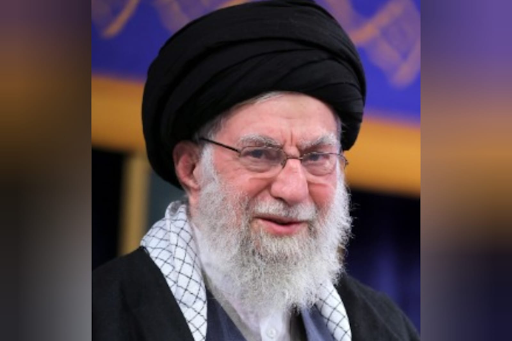
US President Donald Trump called on Iranians to take over their government in the wake of the Supreme Leader’s death. So far, they haven’t. Understanding why requires looking beyond headlines and into the lived reality of a country under siege, economically exhausted, and deeply scarred by decades of violent repression.
The January protests, in which security forces killed more than 7,000 people by some estimates, remain fresh in the national memory. For many Iranians, the cost of political resistance has been made devastatingly clear. With armed forces and paramilitaries flooding city streets, the calculus for ordinary citizens tilts heavily toward survival rather than revolt.
There is also no credible organized opposition to lead such a movement. Decades of systematic repression have prevented the emergence of any political force capable of mobilizing large numbers of people with a clear alternative vision. Iranians living abroad, including figures like former crown prince Reza Pahlavi, fill some of this space, but lack the organizational infrastructure and domestic presence to translate external pressure into internal change.
The Islamic Republic, for all its internal contradictions, has demonstrated a remarkable capacity for survival. It has withstood nearly 50 years of economic sanctions, a devastating eight-year war with Iraq, and multiple waves of domestic unrest. Each crisis has tended to reinforce rather than dissolve the security apparatus’s grip on power.
This does not mean the situation is static. The combination of war, leadership transition, and ongoing economic hardship creates conditions that are genuinely destabilizing. But the path from instability to political transformation is long, uncertain, and in Iran’s case, historically steep.